Source Anti Pilling Warm Sherpa Blanket for Travel, Home, and Picnic
Find 30 anti pilling warm sherpa blanket options from verified suppliers. Compare features like material, size, and customization to select the best fit for travel, home, or outdoor use.
Key considerations
Products List





Comprehensive Sourcing Guide
Strategic Sourcing Guide for Anti-Pilling Warm Sherpa Blankets
The global demand for high-performance thermal textiles has elevated the category of anti-pilling warm sherpa blankets to a critical segment within the B2B home goods and travel accessories markets. For procurement professionals, sourcing this specific product requires a nuanced understanding of material science, manufacturing capabilities, and supply chain logistics. The core value proposition of these blankets lies in their ability to retain heat while maintaining a smooth surface texture over extended periods of use, a characteristic defined by the "anti-pilling" attribute. This guide synthesizes available product data and industry standards to provide a comprehensive framework for evaluating suppliers, defining specifications, and mitigating procurement risks.
Technical Specifications and Material Composition
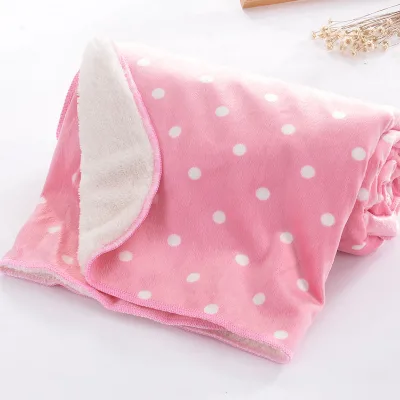
The foundation of a high-quality sherpa blanket is its material composition and knitting method. Based on observed market data, the predominant material for these products is 100% Polyester or Polyester blends. This synthetic fiber is selected for its durability, ease of care, and ability to mimic the softness of natural wool without the associated maintenance requirements. The "Sherpa" designation typically refers to a specific pile structure where one side is smooth and the other features a dense, fluffy texture designed to trap body heat.
When evaluating technical specifications, buyers must scrutinize the knitting method. The data indicates that "Machine Weaved" and "Knitted" techniques are standard. The knitting method directly influences the blanket's drape, weight, and resistance to deformation. A machine-woven structure often provides greater dimensional stability compared to hand-knitted variations, which is essential for products intended for commercial or institutional use. Furthermore, the hardness of the fabric is a critical tactile metric; observed listings frequently categorize these items as "Soft," which aligns with the consumer expectation for comfort. However, "Soft" is a subjective observation, and procurement teams should request physical samples to verify the hand-feel against specific comfort thresholds.
The physical dimensions of the blanket are equally vital. Market observations show a wide range of sizes, from compact travel dimensions like 75x100 cm to larger "King" size variants. The single package size and gross weight are also key logistical parameters. For instance, a typical unit might measure 25x34x5 cm in its packed state with a gross weight of 0.500 kg. These figures are essential for calculating freight costs and optimizing warehouse storage. Buyers should verify if the supplier offers "Customized" sizes, as the ability to adjust dimensions can be a significant differentiator for niche market applications.
Design Customization and Aesthetic Versatility
In the competitive B2B landscape, aesthetic customization is often as important as functional performance. The data reveals a diverse array of design options available in the market. The "Style" attribute ranges from "Simple" and "Plain" to more decorative patterns like "Dot" and "Cartoon." Color palettes are extensive, including standard options such as Green, Pink, Coffee, White, Black, and Grey, with many suppliers offering "Custom" color matching services. This flexibility allows brands to align blanket colors with their corporate identity or seasonal marketing campaigns.
Logo and graphic design integration is another critical customization pillar. Suppliers frequently offer "Embroidery" as a primary method for branding, alongside options for "Custom Logo" acceptance. The "Customized" attribute is listed as "Yes" for many models, indicating that the production process is adaptable to specific client requirements. However, buyers must distinguish between "Non-Customized" stock items and fully bespoke production runs. The "Model Number" often serves as a reference for standard configurations (e.g., OE-009, blanket-001), while "Other Size" and "Prod Standard" fields indicate the potential for further modification. When requesting samples, procurement teams should explicitly confirm the feasibility of embroidery on the specific Sherpa pile, as the texture of the fabric can impact the clarity and durability of the stitched logo.
Compliance, Certification, and Safety Standards
Navigating the regulatory landscape is a paramount responsibility for B2B buyers. While the supplied data does not confirm specific certification statuses for every listed product, it highlights the importance of verifying safety standards. The text mentions "Oeko-TEX" and "BSCI" as background standards, suggesting these are relevant benchmarks in the industry, though they should not be assumed as universal guarantees without verification.
Buyers must actively request documentation to confirm compliance with relevant safety regulations. For textiles intended for children or sensitive applications, such as "Baby Blanket" models observed in the data, chemical safety is non-negotiable. The "Standard" field in the data notes that "can be customized," which implies that suppliers may adhere to different regional standards depending on the destination market. In the European Union, compliance with REACH regulations is mandatory, while the United States requires adherence to flammability standards for bedding.
The "Place of Origin" is frequently listed as Jiangsu, China, Ningbo, China, or Zhejiang, China. These regions are known for their textile manufacturing clusters, but origin alone does not dictate quality or compliance. Buyers should require third-party test reports that verify the absence of harmful substances like formaldehyde, heavy metals, or azo dyes. Additionally, if the product is marketed for specific uses like "Hospital" or "Airplane," hygiene and fire-retardant properties may be subject to stricter regulatory scrutiny. The "Feature" list includes "Anti-Pilling," but buyers should also inquire about "Waterproof" or "Wearable" claims, ensuring these performance attributes are backed by empirical test data rather than marketing assertions.
Cost Drivers and Pricing Dynamics
Understanding the cost structure of anti-pilling sherpa blankets is essential for budgeting and negotiation. The observed price range in the market spans from $0.54 to $148.20 USD, a variance that reflects differences in material quality, size, customization level, and order volume. The "Selling Units" are typically listed as "Single item," but B2B transactions are governed by the Minimum Order Quantity (MOQ). The observed MOQ range is broad, from 1 to 5000 units, indicating that suppliers cater to both small-batch testers and large-scale distributors.
Several factors drive the final cost. First, the material composition is a primary determinant; 100% Polyester is generally more cost-effective than blended fabrics with higher-grade fibers. Second, the complexity of the design, such as multi-color printing or intricate embroidery, adds to the production cost. Third, the "Customized" nature of the product often incurs setup fees and higher per-unit costs compared to stock items. The "Prod Packing" method, whether "Bag" or "Flat Packing," also influences logistics costs. Flat packing is generally more space-efficient for shipping, potentially reducing freight expenses for large orders.
Buyers should be wary of prices that seem abnormally low, as they may indicate inferior material quality or compromised safety standards. Conversely, prices at the higher end of the spectrum should be justified by superior craftsmanship, extended durability, or specialized certifications. The "Feature" of being "Portable" and "Wearable" suggests added value, which may command a premium price point. Negotiation strategies should focus on volume discounts, with the understanding that orders approaching the 5000-unit MOQ threshold will likely yield the most favorable unit pricing.
Supplier Evaluation and Operational Capabilities
Selecting the right supplier requires a rigorous evaluation of their operational capabilities and reliability. The data indicates that suppliers are located in key Chinese manufacturing hubs, but geographic proximity to the port of shipment can impact lead times and shipping costs. The "Place of Origin" varies between Jiangsu, Ningbo, and Zhejiang, each with its own logistical advantages.
When assessing suppliers, buyers should verify their production capacity and lead times. While specific lead times are not provided in the data, the ability to handle "Customized" orders implies a flexible production line. Buyers should inquire about the supplier's capacity to scale production during peak seasons, as the "Season" attribute for these blankets is often listed as "Spring/Autumn" or "Spring and Autumn," suggesting cyclical demand.
Quality control processes are another critical evaluation metric. Suppliers should demonstrate a robust QC system that includes in-line inspections and final random inspections (FRI). The "Feature" of "Anti-Pilling" must be validated through repeated washing and abrasion tests. Buyers should request evidence of the supplier's ability to maintain consistency across batches, especially when dealing with "Customized" color and pattern requirements. The "Brand Name" "Acoshine" appears in the data, serving as an example of a branded entity, but buyers should not limit their search to known brands; many OEM manufacturers offer comparable quality without the brand premium.
Typical Applications and Market Segmentation
The versatility of anti-pilling warm sherpa blankets allows them to serve a wide array of applications. The "Usage" field in the data lists "Travel, Hospital, Bath, Home, Airplane, Hotel, Picnic," highlighting the product's adaptability across different sectors. In the travel and hospitality sectors, the "Portable" and "Wearable" features are highly valued, as these blankets are often used as in-flight accessories or hotel amenities. The "Anti-Pilling" attribute ensures that the blankets maintain a premium appearance even after multiple wash cycles, which is crucial for the hospitality industry where hygiene and aesthetics are paramount.
For the home goods market, the "Style" and "Color" options allow consumers to match blankets with existing decor. The "Age Group" is listed as "Adults," but the "Model Number" also references "Baby Blanket," indicating that the same manufacturing technology is applied to different product lines. This duality suggests that suppliers can pivot production to meet the specific safety and softness requirements of the infant market if needed. The "Application" field mentions "Woman," which may refer to specific marketing angles or product designs tailored to female demographics, though the core functionality remains universal.
Long-Term Procurement Considerations and Quality Assurance
Sourcing anti-pilling sherpa blankets is not merely a transactional activity but a strategic partnership that requires long-term planning. Buyers should prioritize suppliers who demonstrate a commitment to continuous improvement and sustainability. While specific environmental certifications are not universally confirmed in the data, the trend toward "Customized" standards suggests that suppliers are increasingly responsive to corporate social responsibility (CSR) goals.
Quality assurance should be an ongoing process rather than a one-time check. Establishing clear quality benchmarks for "Hardness," "Pattern," and "Feature" performance is essential. Buyers should implement a system for periodic re-testing of samples to ensure that the "Anti-Pilling" claim remains valid over time. The "Single gross weight" and "Single package size" should be monitored to prevent cost creep due to packaging inefficiencies.
Furthermore, buyers should consider the lifecycle of the product. A blanket that is "Anti-Pilling" and made of "Polyester" should be durable enough to withstand years of use, reducing the need for frequent replacement. This durability contributes to a lower total cost of ownership. Finally, maintaining open communication channels with suppliers regarding "Customized" requests and "Logo" updates will ensure that the product remains aligned with the buyer's evolving brand strategy. By focusing on these long-term factors, procurement teams can secure a reliable supply chain that delivers consistent value and quality.
FAQs
What material is used for anti pilling warm sherpa blankets?
The primary material is 100% Polyester or Polyester blends. This synthetic fiber ensures durability and softness while mimicking wool without complex maintenance requirements.
Can I customize the logo on these blankets?
Yes, suppliers offer customization for logos via embroidery or other methods. You can request custom designs, though specific feasibility depends on the fabric texture and production capabilities.
What sizes are available for these sherpa blankets?
Available sizes range from compact travel dimensions like 75x100 cm to larger King sizes. Many manufacturers also provide customized size options to meet specific client requirements.
Where are these blankets typically manufactured?
Manufacturing locations include Jiangsu, Ningbo, and Zhejiang in China. These regions are known textile hubs, but origin alone does not guarantee specific quality or certification standards.
What is the minimum order quantity for these products?
The minimum order quantity ranges from 1 to 5000 units depending on the supplier. Lower MOQs suit small testers, while larger volumes often yield better per-unit pricing.
Are these blankets suitable for hospital or travel use?
Yes, usage includes travel, hospital, bath, home, airplane, hotel, and picnic settings. The portable and wearable features make them ideal for hospitality and institutional applications.
How do I verify the anti-pilling quality of the blanket?
You should request physical samples and third-party test reports for abrasion resistance. The anti-pilling attribute must be validated through repeated washing and wear testing to ensure durability.